
Why So Many Neurodivergent People Thrive in BDSM
Neurodiversity: A Different Way of Being
As a psychologist I cannot help but notice how many neurodiverse people are in the BDSM community - a much larger proportion than outside the BDSM environment. Most of them know about their spicy nervous system, some don’t (or they don’t care) but I have already heard stories that they first get “simply attracted” by BDSM and then later seek out and get their diagnosis (for example because they are inspired by fellow, diagnosed players). Then finally (as so many other things) it all makes sense to them. But why?
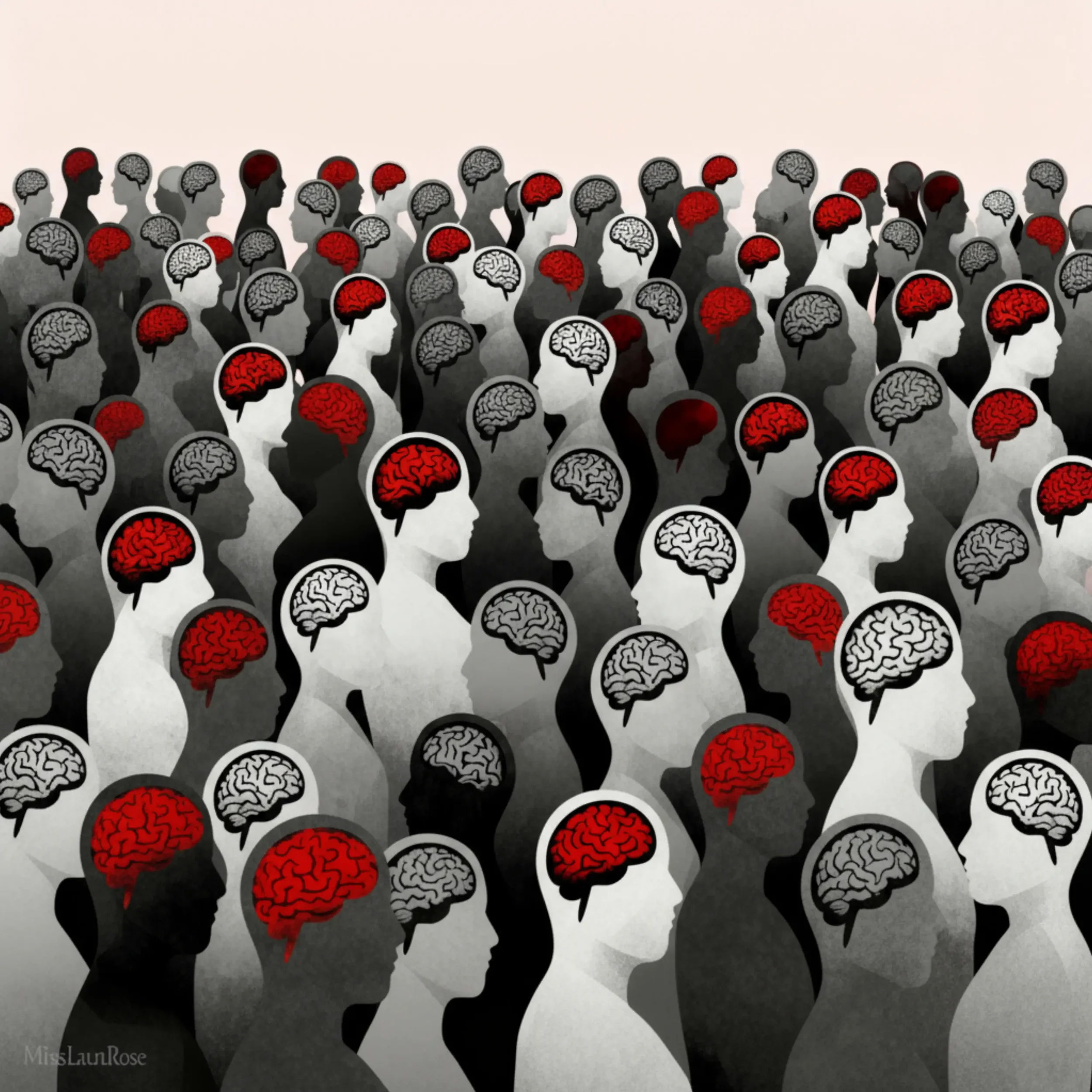
Neurodiversity is a spectrum. It encompasses autism and ADHD—each a spectrum in its own right, and some people sit on both. Beyond these larger categories, there are other, less prominent forms of neurodivergence, each with their own nuances, which adds layers of complexity. But there is one thing that is shared: neurodiversity means that the nervous system works differently for those “on the spectrum” as opposed to those who are not on the spectrum. Neurodiversity is about the different functioning of sensory perception, focus, social understanding and nervous system functioning. There can be phases in life where it’s a limitation to life quality, and therefore it needs help, and treatment. But it’s important to note that
neurodiversity is not a disorder: it is a different functionning of the nervous system.Why BDSM Fits Neurospicy Brains
BDSM is a bit like a “dream world” for neurodiverse people. Kink gives something that regular social spaces rarely do. Structure, clarity, informed consent, explicit expectations, ask-before-touch. For many “neurotypicals” these may seem like overcomplicated restrictions but for those with a special nervous system these mean freedom and safety at the same time. Then add novelty, intensity and chanelled hyperfocus on the situation (and on the body) - and you get a structure where ADHD (-like systems) thrive the most.
There are very clear rules in and out of play – most of them are shared and explicit in the community, but they can of course be restructured and re-written with the partner(s) as long as they are clearly communicated. The fact that there are no hidden “traps”, no hidden “rules” that people “should” notice, it makes the world of BDSM very appealing to a nervous system that works the best with rules, structure and intense focus. Then there is the social-nonsocial aspect: as we primarily work with the body, there is no pressure to talk, and certainly no pressure to do smalltalk or to mask.
Rhythm, Novelty and Nervous System Regulation
Being “understimulated” is still stress for the body. Every nervous system has a sweet zone where stimulation feels just right and functioning is smooth. For many neurodivergent people, that sweet zone is narrower and more fragile. They can swing into overwhelm quickly, yet boredom or lack of input can be just as dysregulating. I like to joke that if you can survive a 90-minute hatha yoga class without wanting to explode, you are probably neurotypical.
Structured intensity helps neurodivergents souls land in that optimal zone. Predictable rhythm gives the brain something to hold onto. In play, this might mean that a steady, repeated impact keeps the nervous system focused and regulated. I often notice that many neurodivergent players relax best with moderate, rhythmic sensations, not necessarily extreme ones. Their system thrives on a balance of stimulation and predictability. Of course I am generalizing, but the pattern is hard to ignore.
Sensory-Friendly, Consent-Focused Spaces
BDSM environments differ greatly from most sex-positive spaces. The lighting is usually dim, the music is quieter, the décor minimal, and personal space is respected. There are clear expectations about touch and consent, which removes the guessing game that so many social settings demand.
To someone used to colorful, high-energy parties, where “everyone loves everyone else”, a dungeon might feel “cold” at first glance. For many neurodivergent people, especially those with autistic traits, this controlled sensory environment is actually a blessing. They can engage deeply in play without drowning in noise, bright lights, or unpredictable interactions. The space itself becomes a tool for nervous system safety:
it prevents sensory overload.Neurodivergence, Queerness and Identity
Neurodivergent people are far more likely to identify somewhere under the LGBTQ+ umbrella compared to neurotypicals.

Here is what current studies suggest:
Higher LGBTQ+ identification:
Studies show neurodivergent people are estimated to be up to eight times more likely to identify as LGBTQ+ than their neurotypical peers.
Gender identity:
Transgender and gender-diverse people are three to six times more likely to be autistic than cisgender individuals.
Sexual orientation:
For autistic people, there is an increased likelihood of identifying as asexual, bisexual, or with another non-heterosexual orientation compared to non-autistic people.
Living with one marginalized identity can already be stressful. Carrying several at once often multiplies the pressure, misunderstanding and exclusion people face. This is one reason BDSM communities can feel like home: it functions as a support group.
Final Thought
Neurodivergent people often navigate a world that feels too loud, too chaotic, too unspoken or simply not designed for their needs. BDSM flips that script. It offers clear structure, direct communication and the kind of sensory input that can finally feel “just right.” That combination is not a coincidence. It is a reflection of how diverse nervous systems seek safety, connection and expression. Kink is not a detour from who someone is. For many neurospicy brains it is a place where things finally make sense, where intensity becomes grounding and where difference is not just tolerated but celebrated as part of the play.