
Margaret Thacher is Out!
There comes a point in pretty much every flogger-lover’s life when the itch for a heavy-end flogger kicks in. Cat-o-nine, rosebud… something deliciously mean for the (at this point) lazy Tops. And just because I am a finger-flogger person, I was not immune. The only problem was that rosebud finger floggers don’t actually exist. Not yet. You can get… close: use the big loop on a “regular” flogger, sacrifice the top three layers of your skin, and voilá — finger-flogging rosebuds.
Surely I can do better - I dared to think.Since this story ends well, I can admit there were moments of deep regret along the way. I gained a whole new respect for why really well-crafted floggers (especially finger floggers) are so f.cking expensive. I already had a hint after making two pairs myself (although one was technically my husband’s project), but the rose buds took it to the next level.
So here is my little journey into building my own rosebud finger floggers, and everything I learned about just how much thought, skill, and dedication goes into making a pair that feels as good as the fantasy.
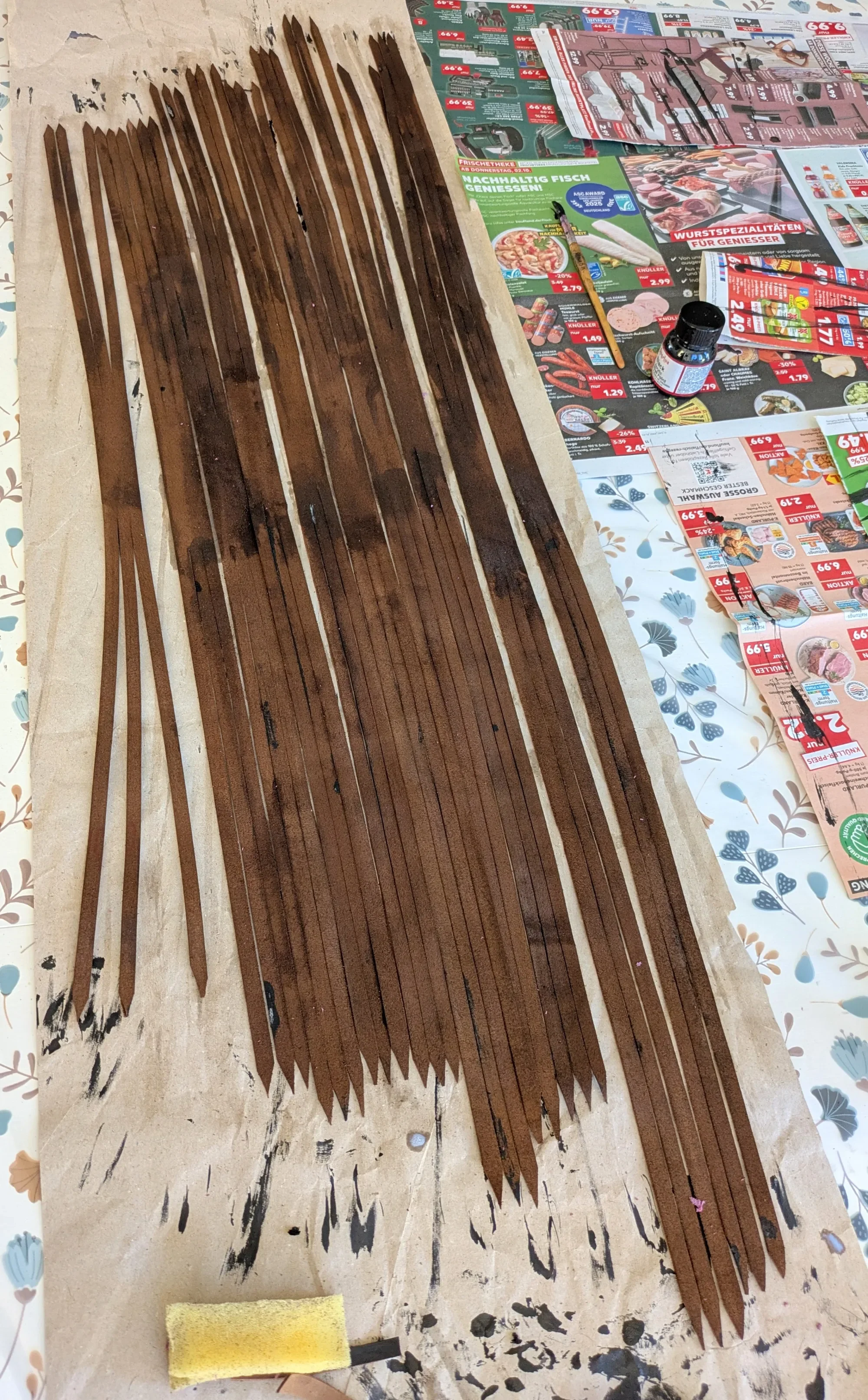
I went to my favourite shop to pick up leathers (and this is an interest-free advertisement for them, because I genuinely respect their kindness and expertise. Plus, they work with plenty of Restleder, which makes my conscience a bit lighter regarding the veganness issue). I could honestly write an entire article just about leather selection, because this step alone will make or break the type of impact your flogger delivers. That and the width of the falls. (End-cutting is like the 99th priority on that list, despite many sales strategies insisting otherwise all over the internet trying to sell you floggers.) I chose a thick, pretty hard (but not “rubber-level hard”), half-finished cow leather in brown and carefully cut each fall to be 2.25 cm wide. Then I cut each fall to futher 3 falls (0.75 cm wide each), leaving the middle uncut. That way I can “hang” them on a D-ring at the end without creating a bulky finish where the falls stack up on each other. I wanted the falls to have different lengths so they wouldn’t stack up on each other during impact, but instead spread out over a larger area.
I must admit that at first I tried leaving the ends uncut to get a more “pinchy” sensation. With the braided falls spinning faster, but the ends being wide, the impact becomes more “fleshy,”. To get that result I had to use a mystery braid, which is already a pretty advanced technique. In the end the effect felt too similar to what Artemis can already do, and I wanted something different to diversify my finger flogging portfolio. So I decided to add more weight and more impact to the ends. That is how the idea of the rosebuds was born.
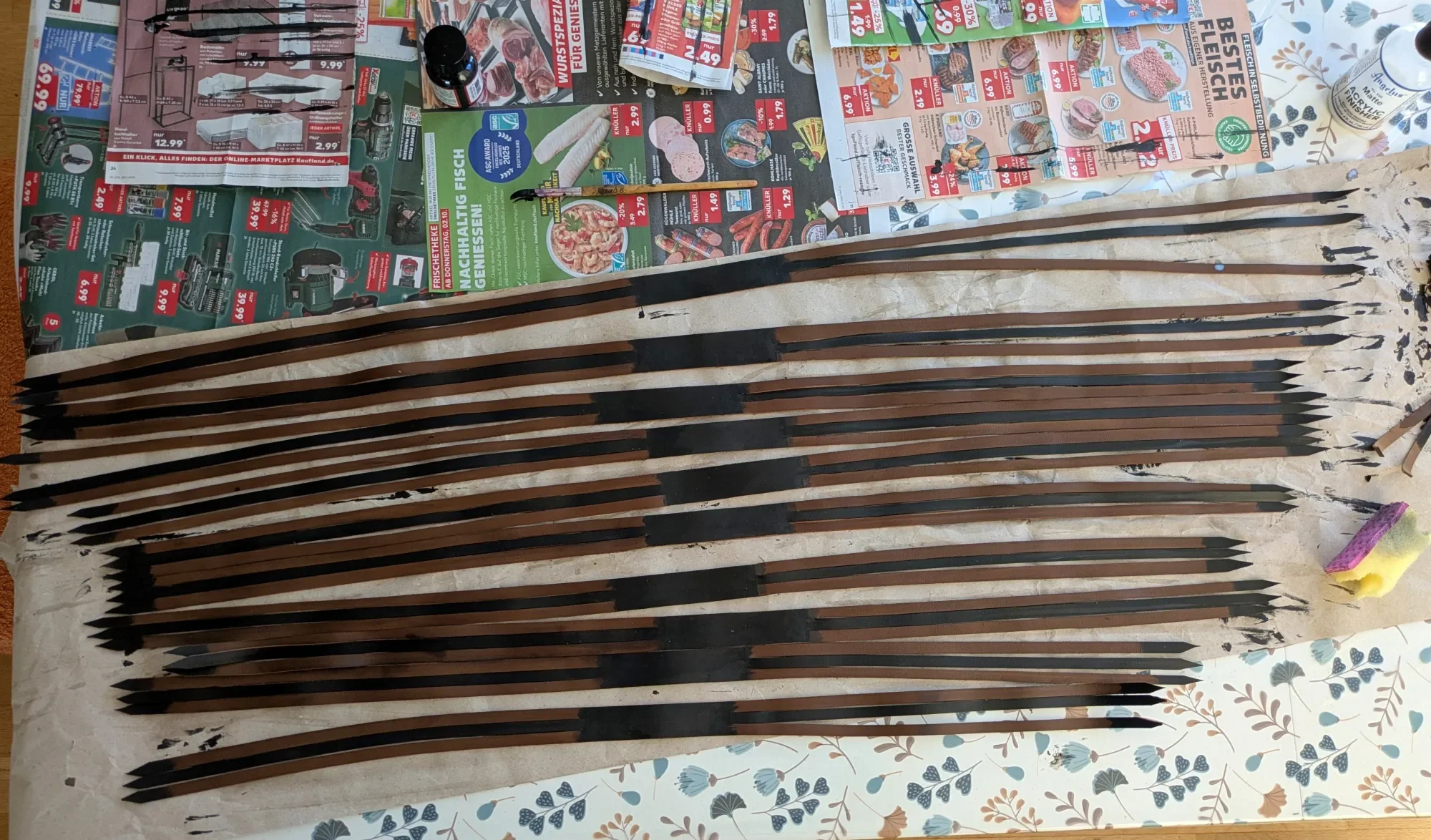
Since I don’t particularly like the brown color, I decided to add some black paint (after seeking advice from another team of experts, of course). Plus I wanted to experiment with leather painting that could potentially take my design fantasies to the next level as well.
The next step was to paint the leather with acrylic. Most leather is sold with the pores still open so you can finish it however you want, depending on your project. In this case, my “want” was to keep it protected from sweat and other human substances. So I treated both sides with acrylic paint. Fully water repellent at this stage, although it will degrade to some extent over time. The black coat was technically a finisher too, but that did not stop me from adding an extra sealing layer.
Being the scientist I am, I like all my floggers to weigh the same (300 g), so the “spin feeling” differences only come from exciting things like aerodynamic drag and weight distribution. A quick calculation revealed I needed 10 falls per flogger (folded in half, so technically 20 falls per flogger).
Then came the 40 falls needing braiding. If I was to do the project again, I would make the braiding tighter, but never mind now. The non-tight braiding actually gives a very nice leathery, but robust-flying sound when I spin them. After braiding I could finally place the falls onto the D-Ring, so it began to resemble a finger flogger!
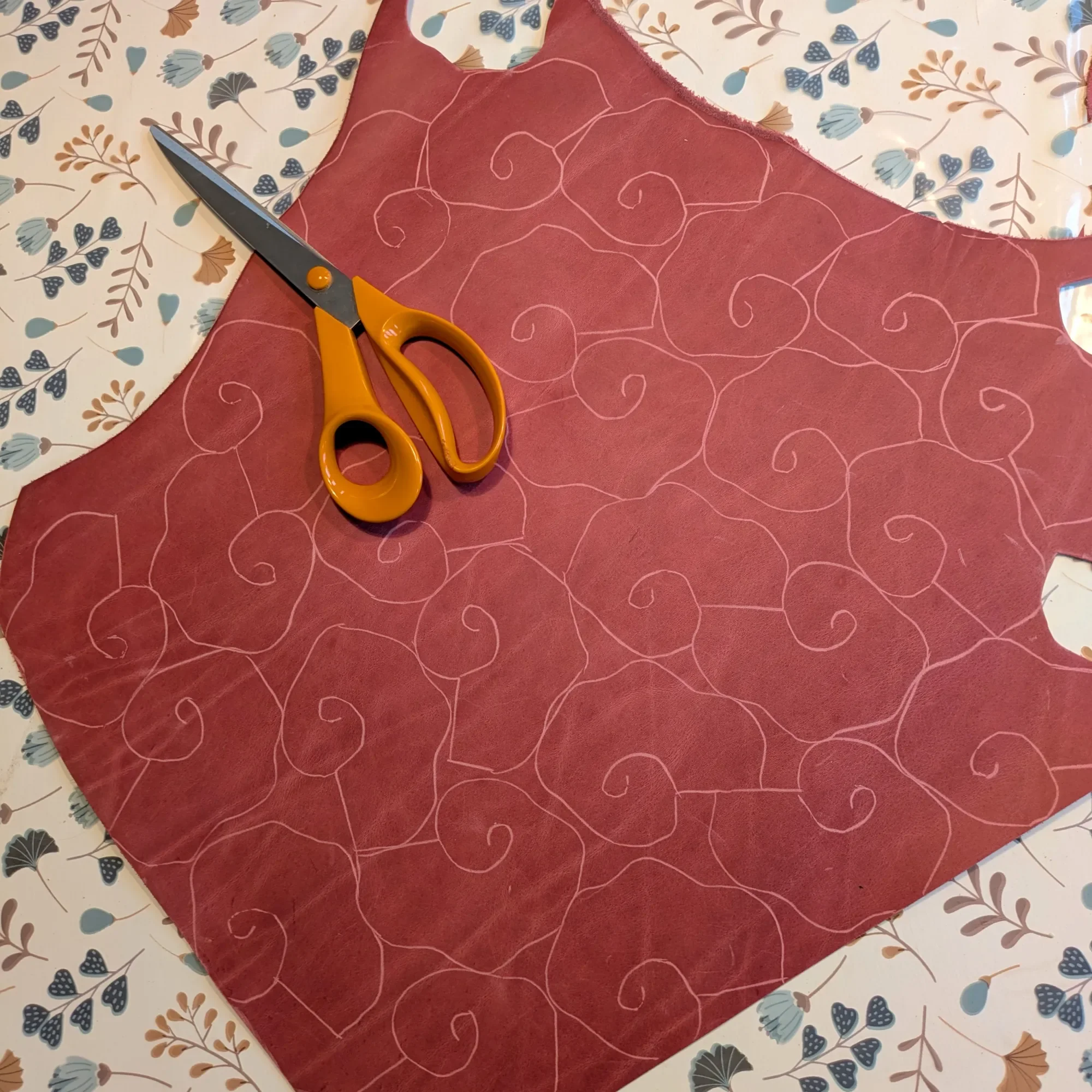
Then came the roses. I still had leather leftovers from Rosie, so I decided to use those. Also thick, also hard cow leather (which I know people like to feel on their skin anyway), so perfect for the job. I tested several versions of a rosebud template until I arrived at a ridiculous-looking 2D shape that surprisingly worked.
Well, 40 falls (braided at this point) meant that I had to make 40 rosebuds in total.This was the first moment I questioned my sanity. But by now there was no turning back and that if I wanted rosebud finger floggers, this was my life now.
So, 40 rosebuds it is.
I pre-draw each piece on the leather and cut them out individually with scissors. Honestly, I’m still amazed at how leather-workers get those perfect curves using the standard leather tools (rotary cutter and blades).
Next step was attaching the “end thorns” of the falls to the flat rosebuds ready for rolling. At this point I found out from my husband, that leather glue does not actually glue (a least not permanently) which shattered my dreams about an easy finish... So I couldn’t rely on glue alone to keep the buds at the end of the falls. I had to bring out the needle and thread after glueing everything in place.
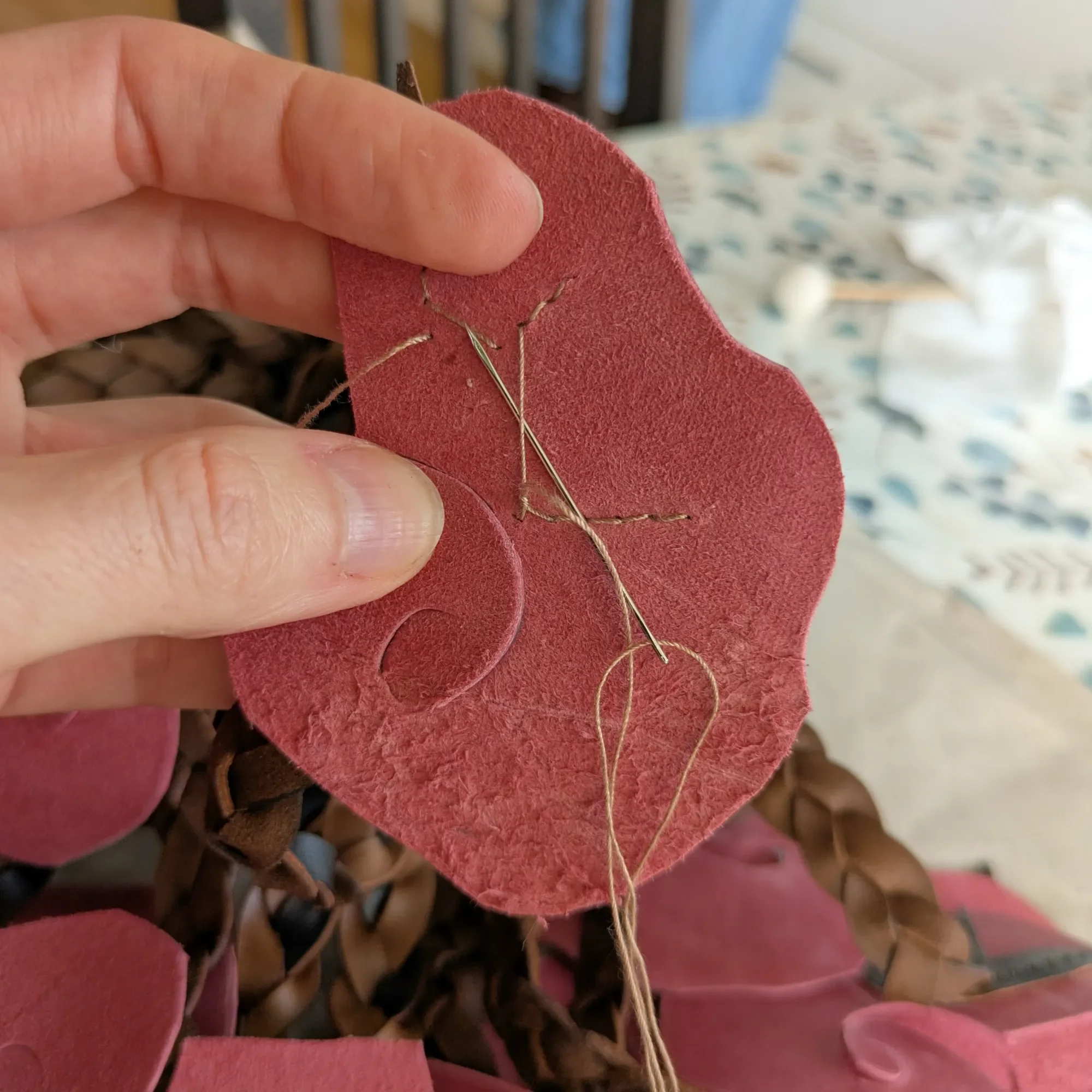
Sewing leather is a bit different than sewing fabric: I had to pierce through two thick layers of leather to prepare them for stitching.
Then came sewing through the holes. Every single thorn. All 120 of them.
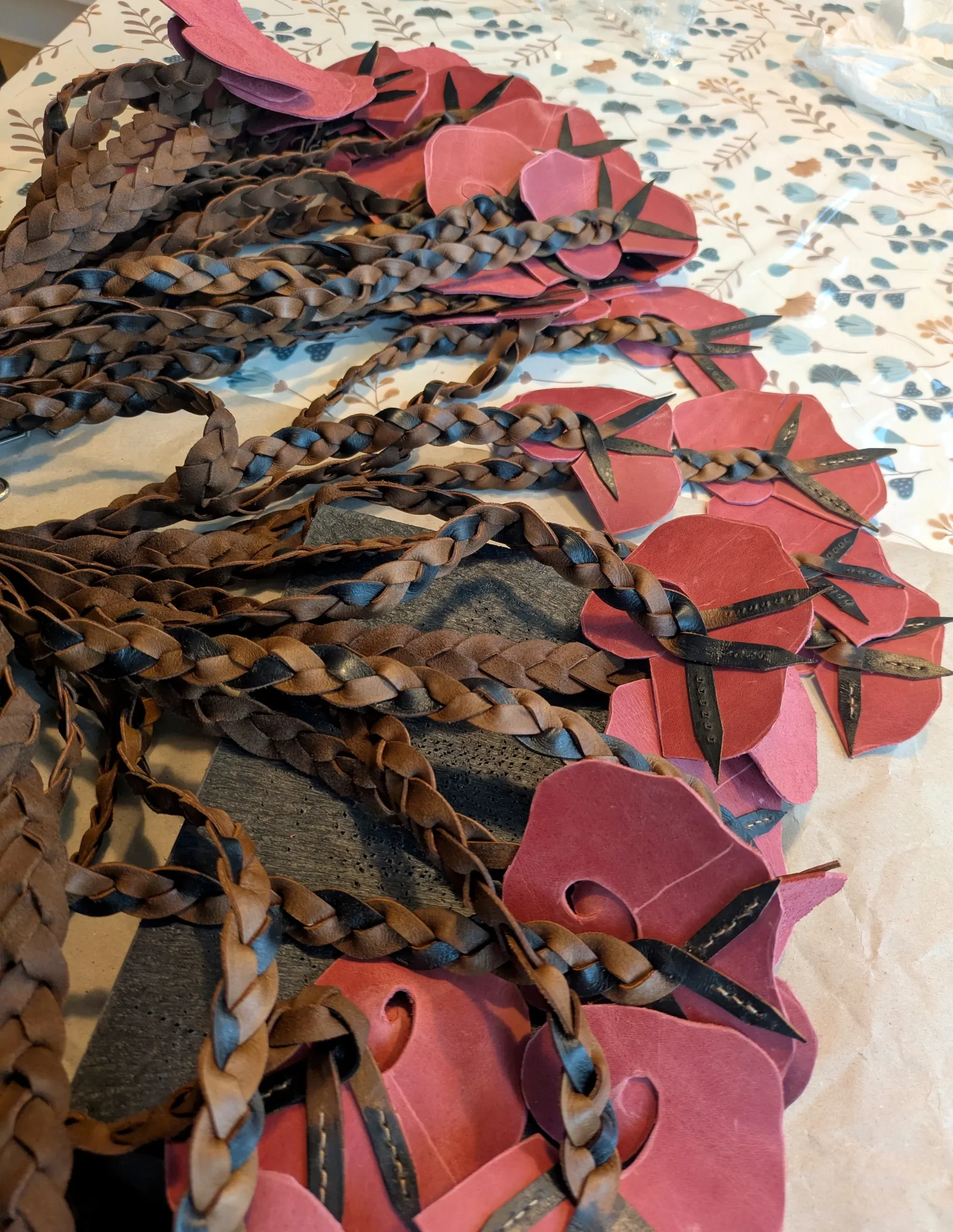
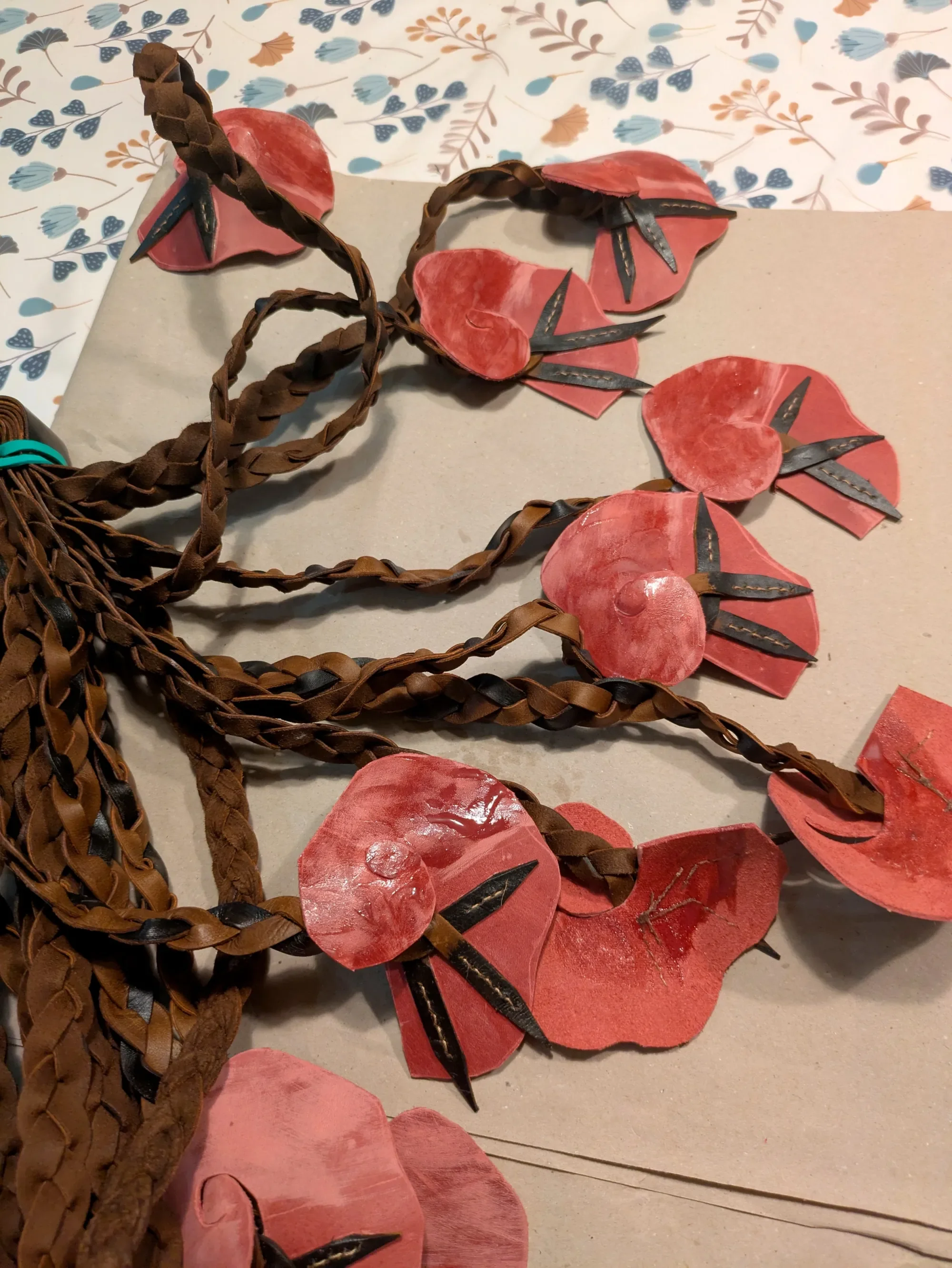
I really like how they turned out visually: the black ends of the falls create a “black thorn” effect, but the light brown threads add a level of detail and sophistication. I also love the color combination!
Then finally came rolling time.
I used a pressure-reactive leather glue to roll the rose buds. The more force between the layers, the stronger the bond. Great for the initial roll-up and even better in use because impact pressure comes from the side, reinforcing the stick instead of challenging it. At this point you want to avoid glue on the outside and the inner side of the (finished) rosebud, for aesthetics and to prevent dust sticking onto the surface. After drying, they had to be rolled up, as tightly as possible.
Then came the finger loops. Luckily I had experience and the tools from previous builds, so I just continued with what I knew worked.
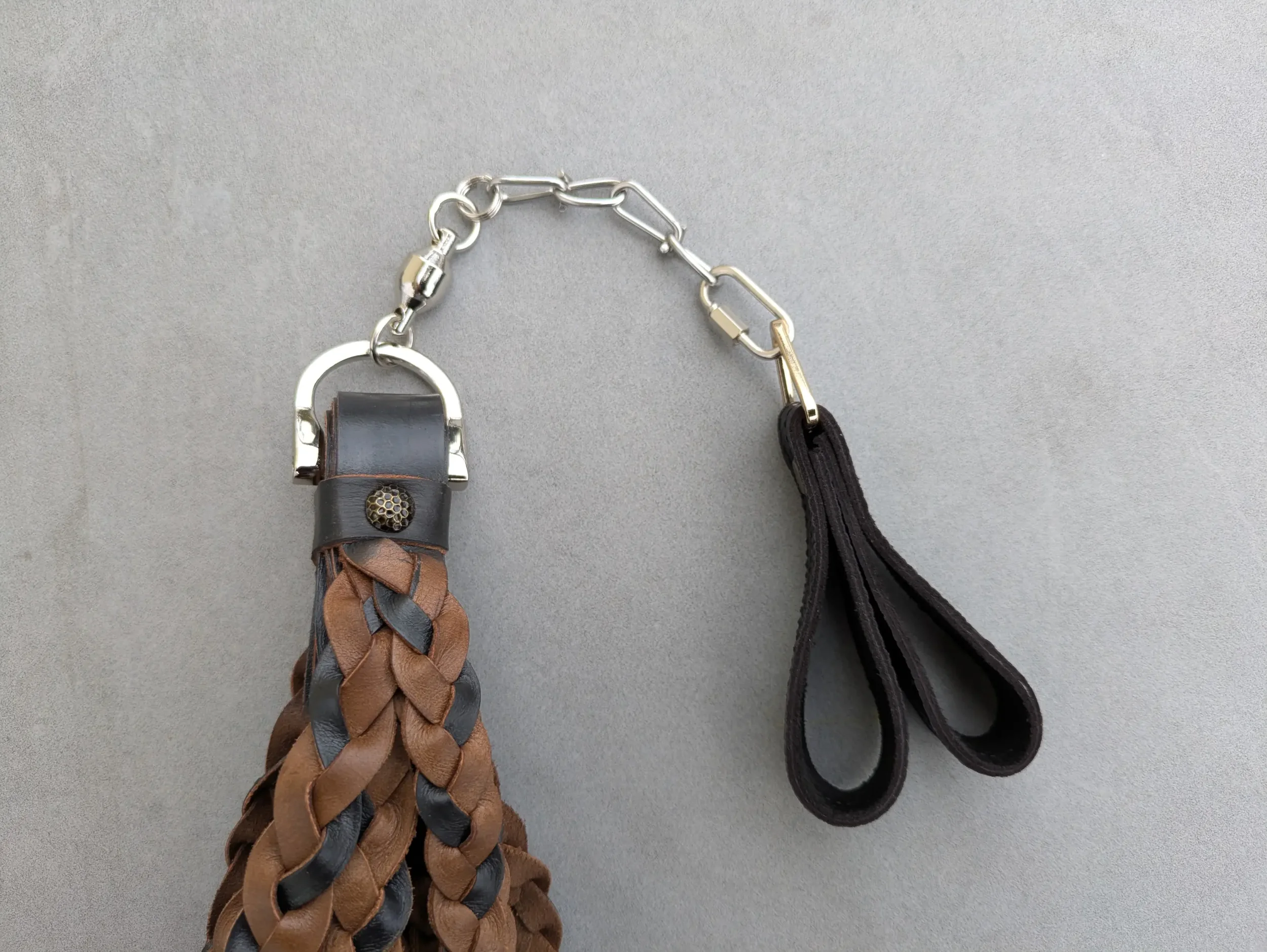
One more thing worth mentioning. Most finger floggers on the market use trigger snaps (with built in swivels). I have never found one that keeps the spin clean and smooth in my oppinion. They all seem to steal energy, which adds up long term. So I went with a stand-alone swivel. No noticeable loss of spin power, beautifully smooth motion. The stand-alone swivel is harder to control at first, yes, but after practice it became my favorite hardware companion. Watch the video at the end of this post!
Overall I think it took somewhere around 16 hours to make these finger floggers. And that’s discounting the time I (we) spent planning, looking for the leather, paint, suitable hardware, decorative pin, and coming up with the fingerloop design. So that’s just the “making” time, let’s put it that way. This is what makes them so expensive!
But oh my god, was it worth it!!Finally (that is before my blog-naming-ceremony) a small gallery of the “endproduct”:
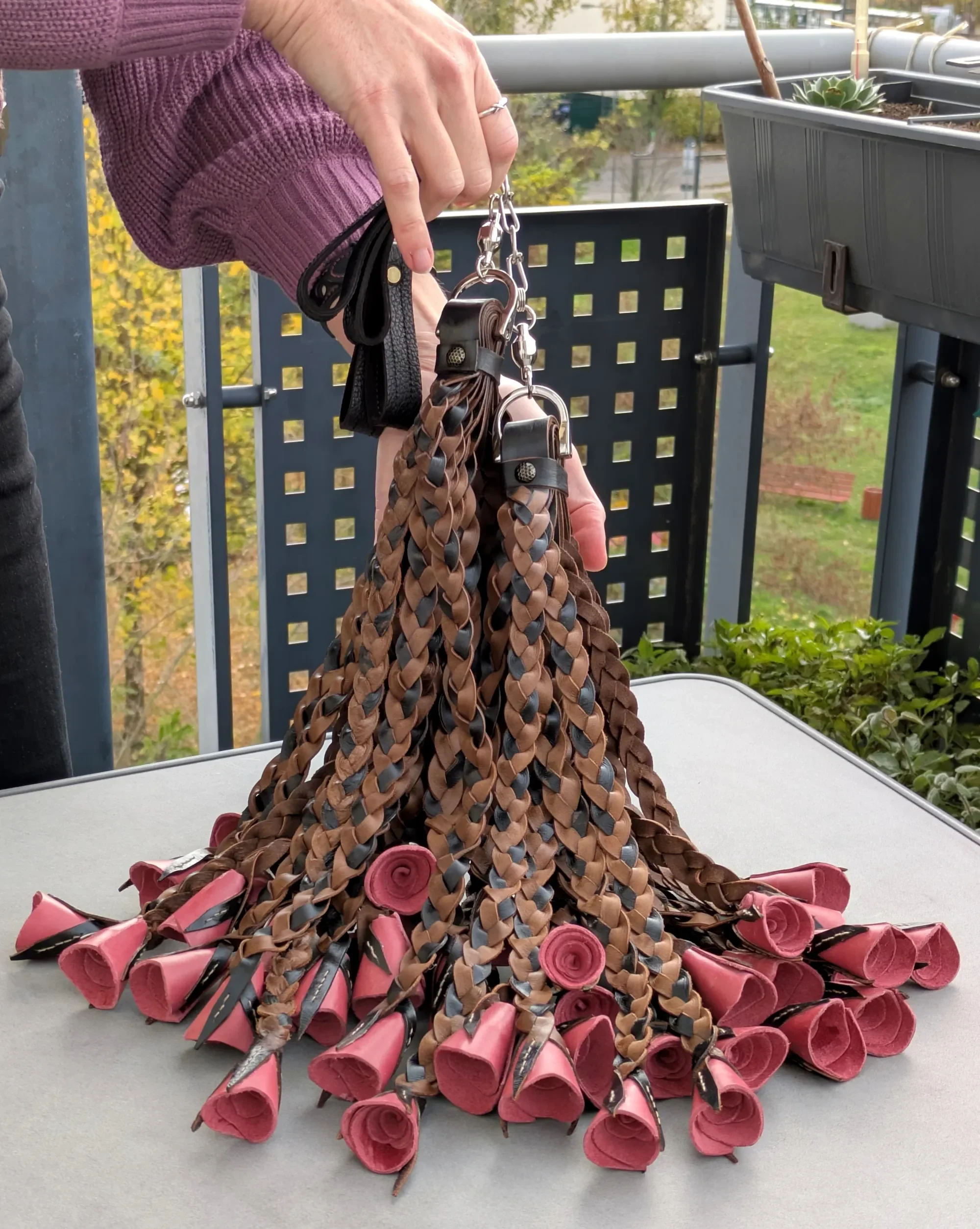
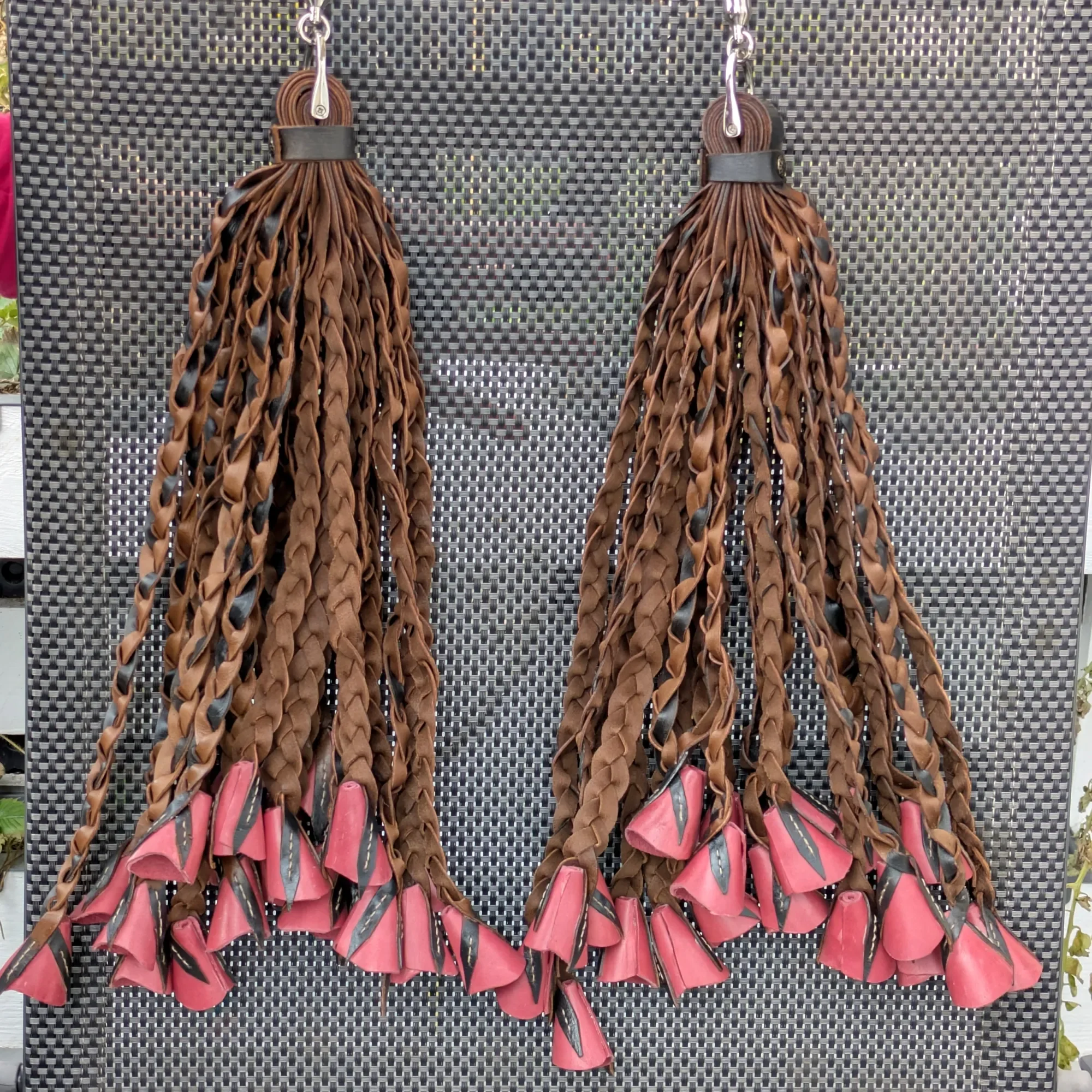
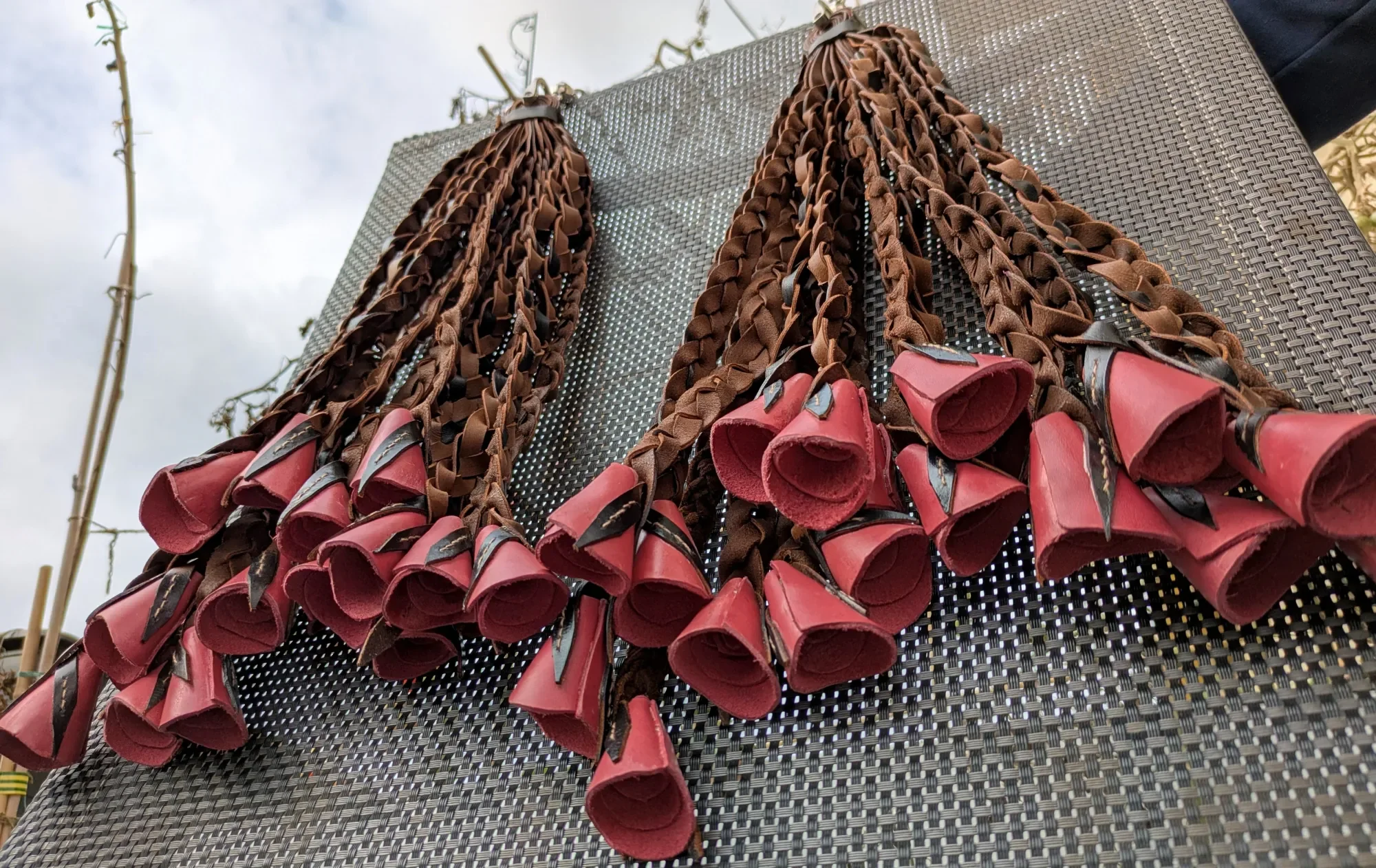
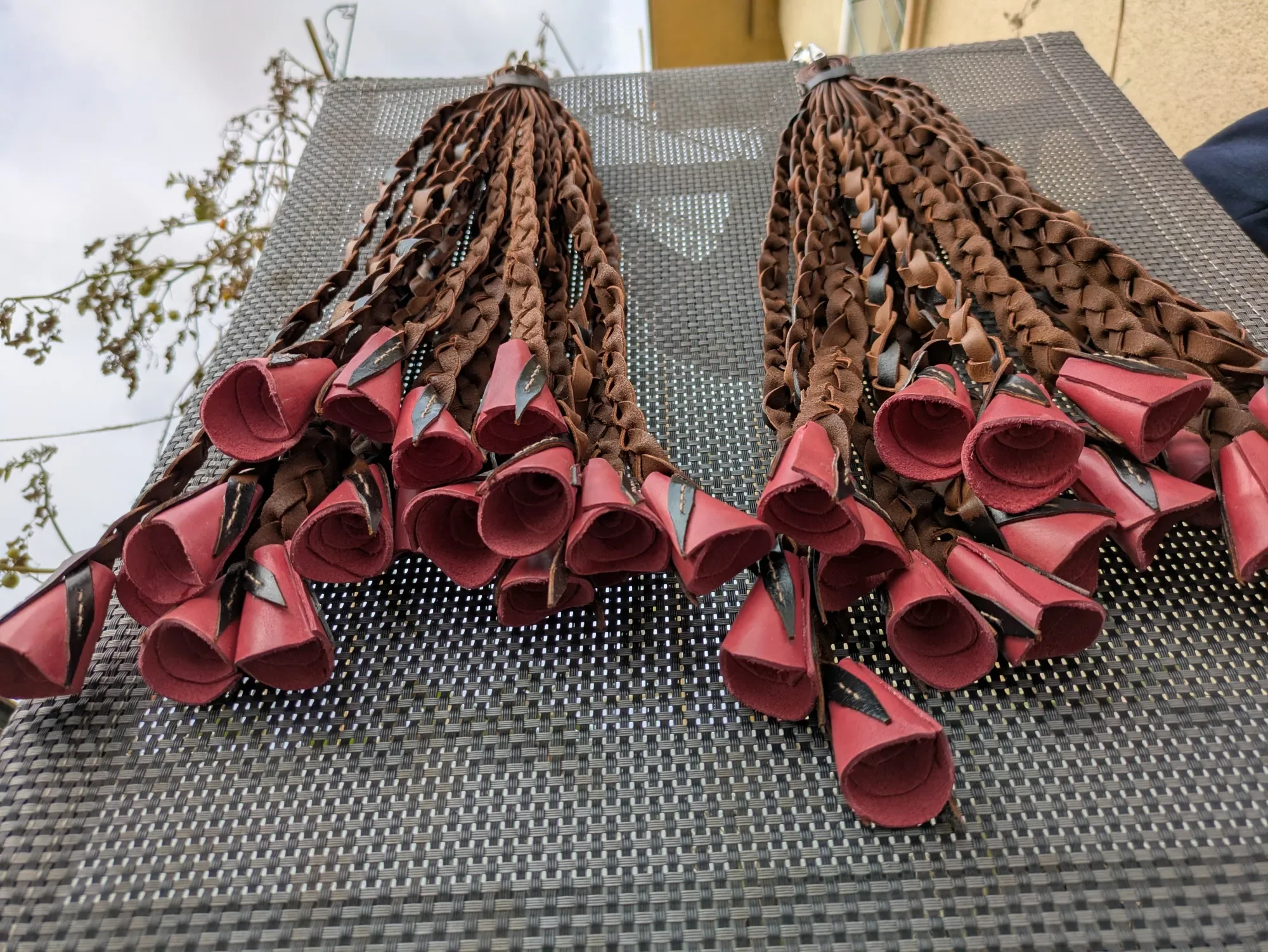
So why the name? I wanted a pair of floggers that get to the point. Feminine but powerful. Elegant, yet unapologetically ambitious. Pretty at first glance, but with a hidden strength. That reminded me of Margaret Thatcher.
Thatcher was the first female Prime Minister of the United Kingdom 1979-1990, coming from a modest, non‑elite background and rising to the top of decision-making in a male‑dominated world where women were expected to “just be home for their families.” The Conservative Party symbol is the rose, which felt like an extra (poetic) fit. She was also a mother. Of twins, actually, born in 1953, so her entire political career emerged after they were born. It is one thing to push forward when you are only responsible for yourself. It becomes an entirely different challenge when your choices and energy shape the happiness and values of little humans who rely on you.
I have a small personal connection to her story too. When I was nineteen, I spent a few months working in an elderly care home in England. One of our residents had been Thatcher’s secretary. I will never forget the fragile strength in that lady’s eyes, and the quiet respect the staff always showed her. That memory made the rose feel like more than a symbol and it felt like a spirit worth honoring.
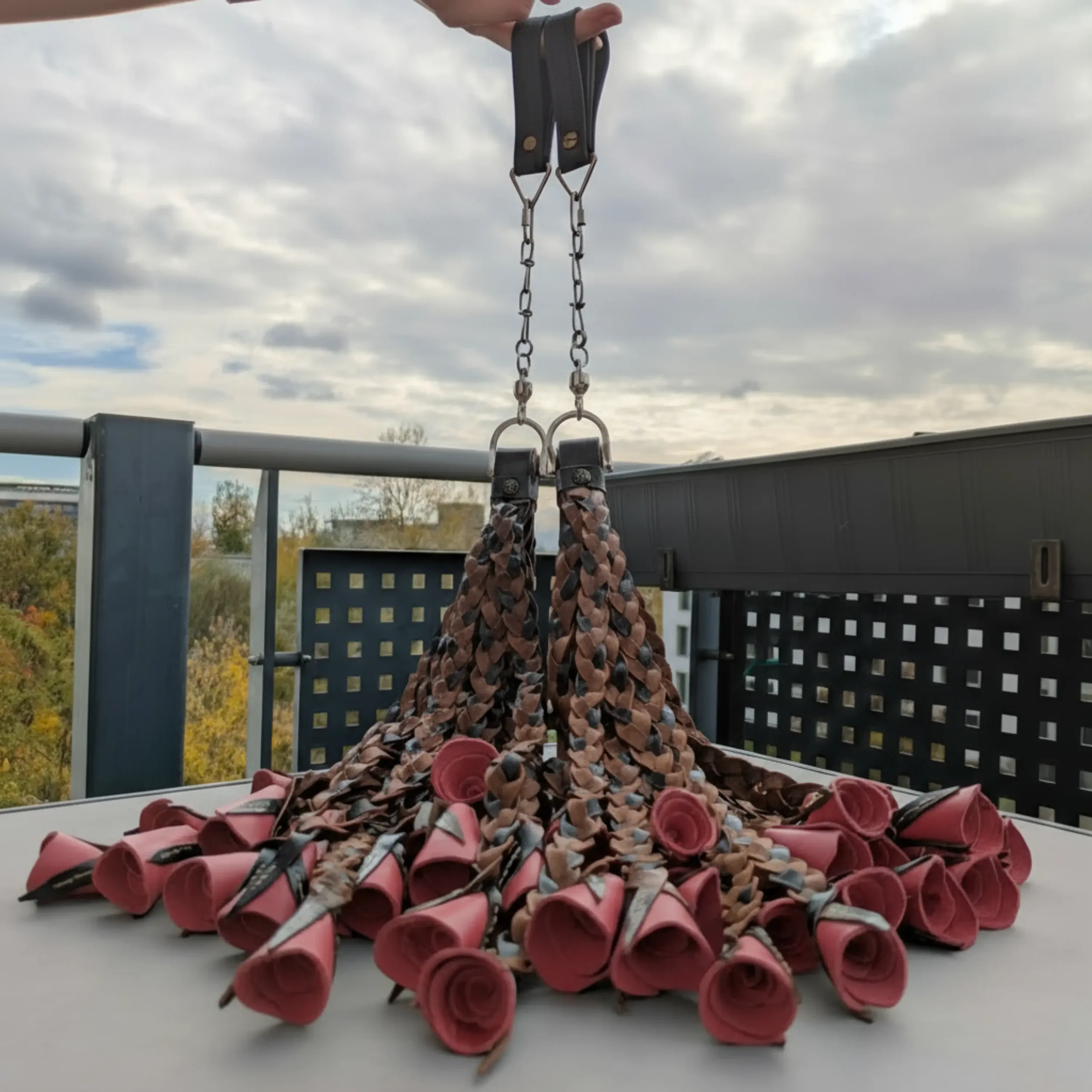
Finally, watch the spin:
Quick note to the end: if you’d like to make your own finger floggers, you’ll find this tutorial helpful.