
NOT EVERYTHING IS A MYSTERY IN IMPACT PLAY
BLOG
The neurochemistry of pain, the psychology of desire, and the lived experience — the foundation beneath (almost) everything I do.
From Sting to Thud: The Neuroscience of pain types
The umbrella term "pain receptors," under the microscope. Just as there are different types of pain, there are also different types of pain receptors — and this creates both the opportunity and the necessity to stimulate more than one type for a truly all-round experience. What are these types, and how do you stimulate them?

Pain Threshold Has Nothing to Do with Being a "Real" Masochist
An entry on why masochism does not equal high pain tresholds.

Chronic Pain and Impact Play
Blending science and lived experience, this post explores how consensual pain in BDSM can paradoxically ease chronic pain - offering not a cure, but a profound sense of relief, agency and embodied healing.

PAIN AS PLEASURE II: System-level Convergence
A deep dive into the neurochemistry of kink, this post unpacks how dopamine, oxytocin and our own endorphins blend pain and pleasure into a single continuum - where context, consent and anticipation reshape the biology of sensation.

PAIN AS PLEASURE I: Common Pathways
Impact play becomes erotic because pain and pleasure overlap in the brain. In safe, consensual contexts, pain can activate reward circuits, transforming sensation into pleasure. But how?

THE NEUROCHEMISTRY OF PAIN II: Timing Matters
Endorphins, dopamine, and oxytocin work together over time - paced, rhythmic impact in a safe setting transforms pain into pleasure, creating a deep mind–body experience. Because timing matters!
THE NEUROCHEMISTRY OF PAIN I: Opioids, Endorphins, Noradrenalin and Others
Bridging science and sexuality, this post explores why pain can feel erotic - revealing how, under the right psychological and relational conditions, the brain’s pain and pleasure systems interact to transform sensation into desire.
THE GATE THEORY OF PAIN III: Learning and the Brain
This post explores how refocusing the mind during impact play - guided by the Gate Control Theory of Pain - transforms managed pain into deeper pleasure, catharsis, and connection, highlighting the practice as both a skillful art and a neurological experience.

THE GATE THEORY OF PAIN II: Early vs. delayed neural reactions
This post explains how pain unfolds through different neural pathways, showing how pacing and rhythm in impact play allow slower C-fiber responses to trigger endorphins, transforming sharp sensations into euphoria and altered states of consciousness.
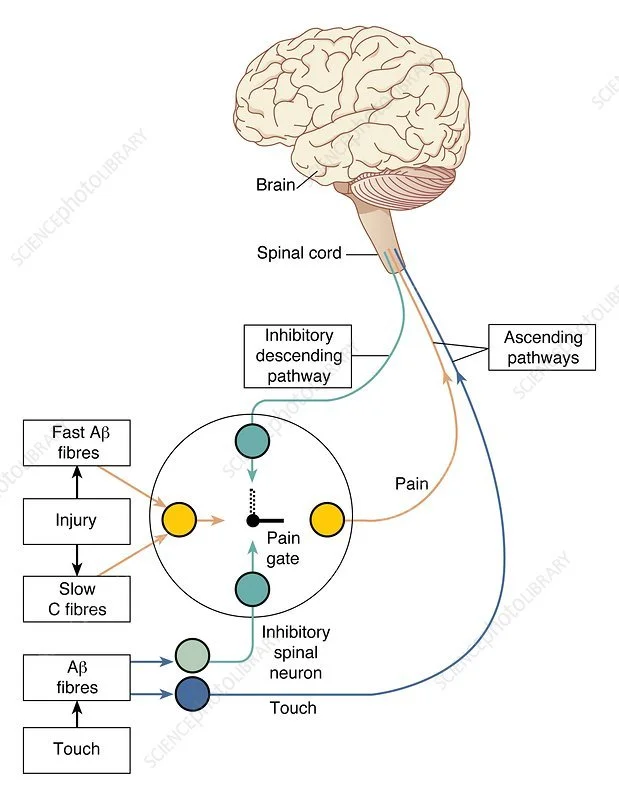
THE GATE THEORY OF PAIN I: The Multidimensional Experience
This post introduces Melzack and Wall’s Gate Control Theory, showing how pain is a dynamic, context-dependent experience and how understanding its neurobiology helps explain why consensual impact can transform sensation into pleasure.