
A topic that rarely gets discussed in impact play—and one that deserves far more attention—is what happens after the session is over. A session doesn't end with aftercare. It doesn't end with one final hug, when you head into the kitchen to start making dinner or when your guest leaves the studio.
That is only the beginning of another phase: integration. And part of this process can be top drop, bottom drop, or sometimes both. And we need to talk about it, normalise it, integrate the drop into the aftermath of every session.
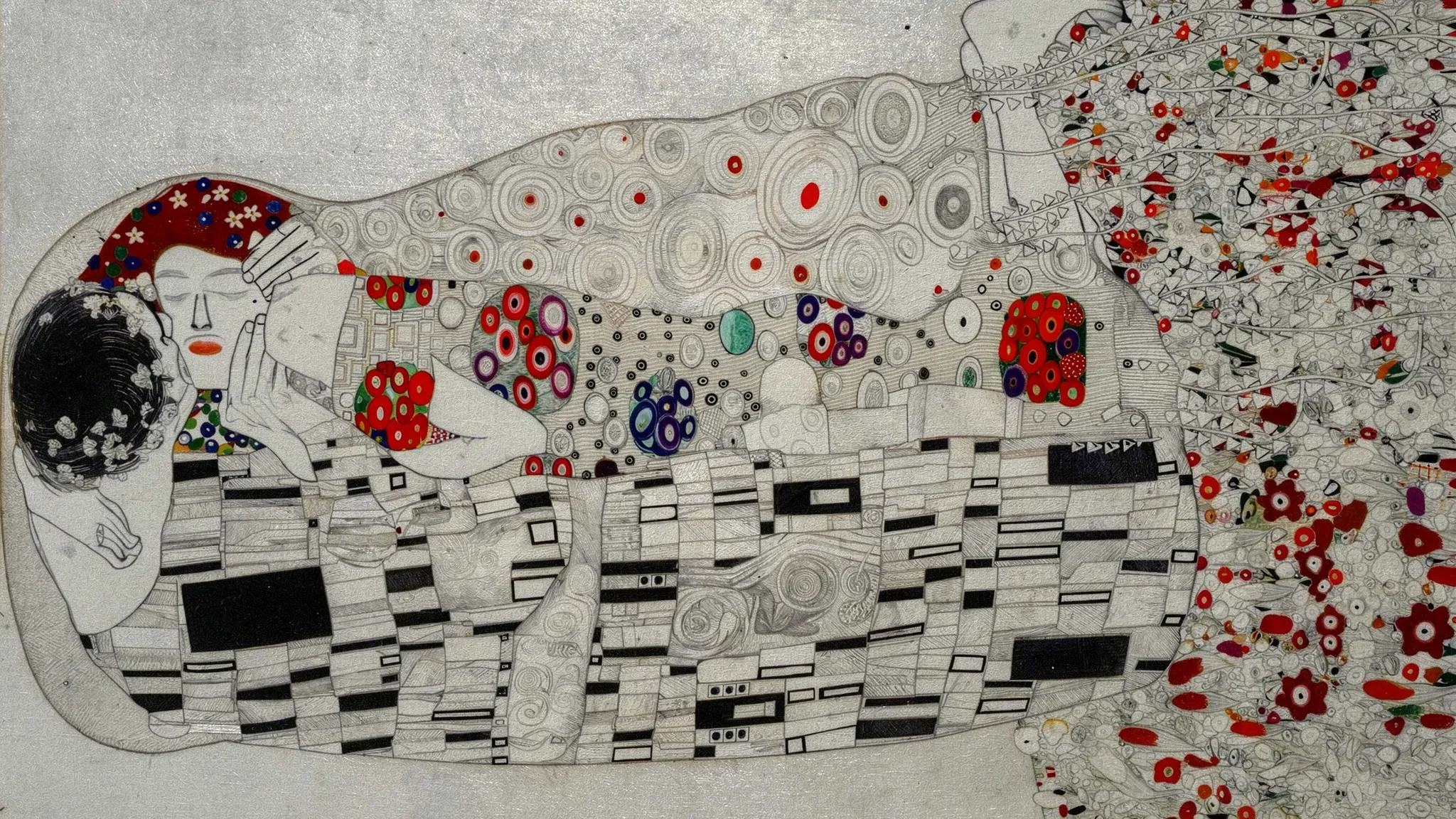
One warm summer afternoon, a couple came to see me at the studio. After walking them out, I returned to the room to clean up in after-vibe of the session and in the heat of the room.
I sat down in front of my floggers. They were scattered on my impact wrap-bag, some were hanging from the swing, others rested on a chair several steps away. Some needed disinfecting, others a soapy bath in the bucket from the kitchen. Everything we touched needed desinfection, and the floor a good mopping.
I simply sat there. The task felt impossibly complicated.
So I burst into tears. I just couldn’t get started.
During the previous three hours, I had shared years of accumulated knowledge, guided two people through new experiences, heights and depths of pain, and given them plenty of inspiration to take home. Yet I suddenly felt completely incapable of doing something I had done dozens of times before.
More than anything, I wanted someone else to do it for me. I waited for something to happen. I lay down on the floor and listened to the silence and to my occasional sobbing.
When I finally got up, I walked to the kitchen four or five times, forgetting something on every trip. I mixed up the timing, so the rubber floggers I had washed didn't have enough time to drip dry. After carefully wrapping away every flogger, I discovered one still lying on the table. I started again. Only to realise I had forgotten to wrap away my pinwheels.
I was an absolute mess. I doubted myself, my skills, my worth - my impostor syndrome has never been stronger.
Just an hour earlier, my guest had broken down in tears several times while I was flogging her. Each time she touched a place of profound sadness. We paused, I held her, grounded her, and when she felt ready we continued slowly descending into intensity—only to find herself once more in that same deep emotional place. Again and again, I held the space for her.
When she finally left, her face looked lighter. She smiled in a way she hadn't when she arrived. She was okay. I wasn’t.
Why does the drop happen?
Neither top drop nor bottom drop has been studied extensively in BDSM research, so there is no universally accepted biological explanation. What we do understand, however, is how the nervous system behaves during prolonged periods of intense physical, cognitive and emotional engagement.
During an impact session, the nervous system enters a state of unusually high activation. Pain, anticipation, movement, concentration, emotional attunement and physical exertion all demand processing at the same time. To meet these demands, the brain orchestrates a remarkably complex neurochemical response - for the receiver, but also for the top.
We usually attribute these neurochemical processes to the receiver, but the top's brain is no passive observer in this process. A skilled impact top spends hours in an extraordinary cognitive state. The prefrontal cortex continuously plans movement, adjusts force, monitors safety and predicts outcomes. Sensory systems analyse the sound of every strike, skin colour, breathing patterns and muscle tone. Networks involved in empathy constantly interpret facial expressions, posture and emotional cues, while the motor cortex executes thousands of highly precise movements and continuously corrects them.
This sustained attention is metabolically expensive. Throughout the session, both partners are operating far outside their everyday baseline—not only physically and emotionally, but neurologically.
The emotional work
Impact topping is far more than swinging a flogger. For hours, we continuously observe, adapt and anticipate. We monitor breathing, muscle tone, skin colour and emotional shifts. We adjust force, rhythm and technique. We make hundreds—perhaps thousands—of tiny decisions, many of them completely outside conscious awareness. And much of this through the mirror neuron system.
Heavy impact play also carries genuine physical and emotional risks, thus responsibility—more than most other BDSM activities. A brief lapse in attention, poor judgement or simply arriving after a sleepless night can have consequences. Maintaining this level of attention for hours places the brain in an unusually demanding cognitive state.
Then the session ends.
Within minutes, the nervous system begins shutting down the heightened state it has maintained for hours. The neurochemicals’ level starts to decrease - some within minutes, others take hours to return to close to baseline. At the same time, the autonomic nervous system shifts away from sympathetic activation—our familiar fight-or-flight state—and gradually returns towards parasympathetic regulation: rest, digestion and recovery.
This transition is anything but fast. The nervous system needs time to recalibrate, and during this period it is more sensitive, more vulnerable and more easily overwhelmed. For some people this feels like profound exhaustion; for others it manifests as sadness, emptiness, irritability, unexpected tears or a strange sense of emotional flatness. Many experience exactly this transition as top drop or bottom drop (I still prefer the word “receiver” but “receiver drop” needs more introduction into language).
Mental fatigue adds another layer. Studies show that prolonged periods of intense cognitive effort alter neurotransmitter balance, reduce executive functioning and increase the cost of even simple tasks. This may explain why packing toys away, cleaning a play space or finding my way home after an intense flogging-nightout can suddenly feel absurdly difficult after a session / playnight.
Both partners have been operating far outside their normal baseline. Both nervous systems need time to find their way back.
For many people, this takes somewhere between 6 and 24 hours. Others feel perfectly fine on the day of the session, only to experience the drop the following morning—or even one or two days later. Just as sore muscles often appear the day after exercise, emotional and neurological recovery frequently lags behind the experience itself.

Give yourself time to come back
If you experience top drop or bottom drop, remember: you are not broken, and you are not reacting “wrong.” Your nervous system has simply been somewhere “else”, and it needs time to find its way back.
The most important thing is not to fight it or immediately search for an explanation. Give yourself a soft landing. Go outside and feel the air on your skin. Move your body—stretch, shake, dance, jump up and down. Go for a walk, go for a run. Go to the beach, jump into the spa. Drink water, eat something nourishing, meditate, take a shower, or call someone you trust and talk about what happened, or simply about something completely ordinary.
Intensity comes with integration. It is not the price we pay for going deep—it is the process that allows the experience to become part of us.