
The Anatomy of a Good Beating: Inside Our Impact Play Workshop at Atrium
More and more of our guests are asking for canes, floggers, whips and increasingly longer scenes. Not only as a quick pain-play before the "real" play starts, but often a forty-five minutes or longer intensity that is the focus of the session.
So we did what we usually do at Atrium when the interest from colleagues is there: we build an in-house skill- and knowledge sharing workshop around it.
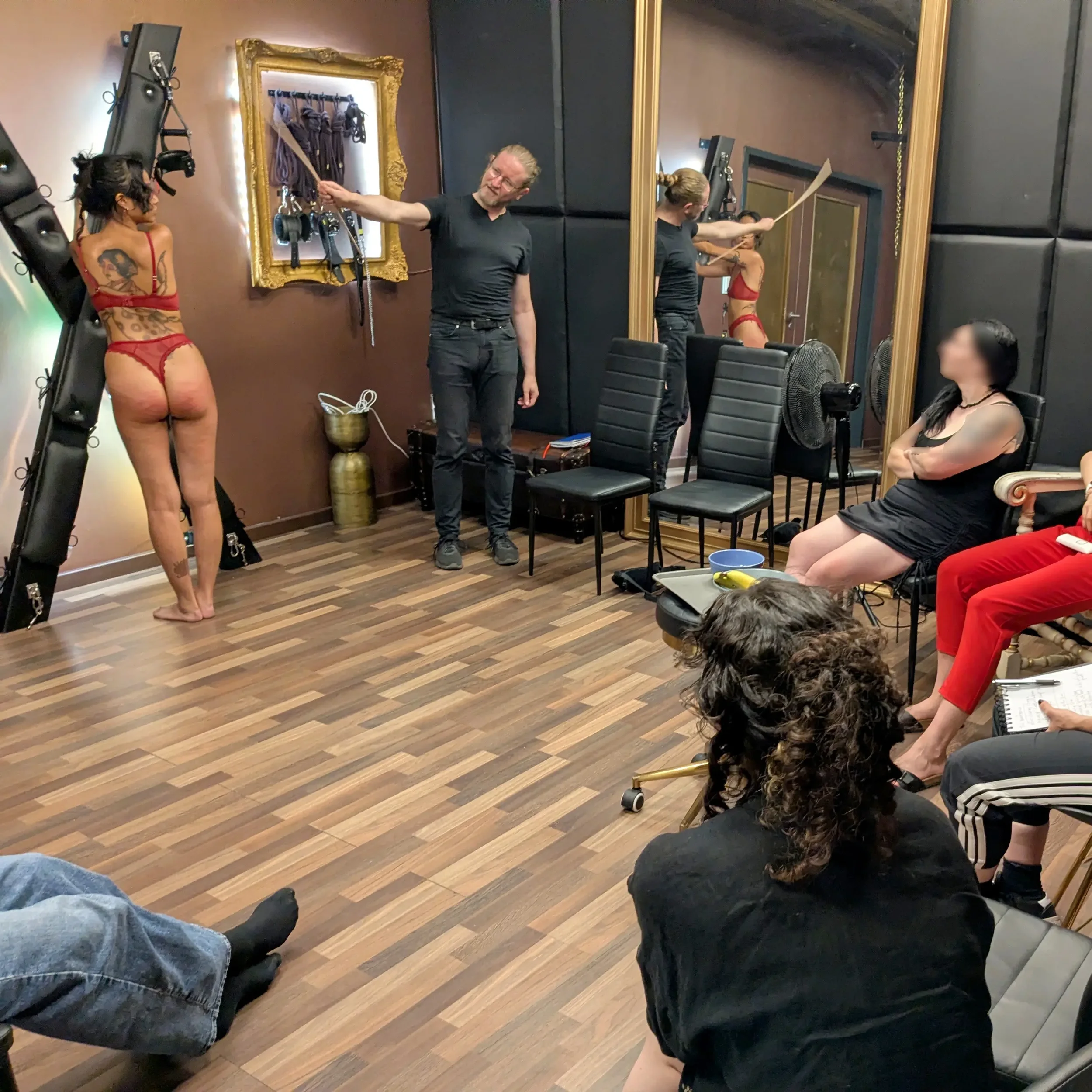
Seven colleagues joined Hekate and Master Samael for an evening dedicated to the technique and art of professional impact play. Together we explored technique, physiology and pacing—breaking down what turns a good beating into an unforgettable session. Here are the 5 takeaways.
Skin Preparation Is Everything
Skin that has been properly prepared—"leathered up"— for about half an hour lasts remarkably longer than skin that is struck cold. A warm, deep-red body can comfortably take leather, rubber, plastic and wood for well over an hour without breaking, allowing the intensity to keep growing.
If blood is part of the fantasy, it can always come later. When skin breaks comes too early, it shortens the scene and creates practical challenges, since blood is difficult to contain and flogger-leather cannot be disinfected once contaminated. Good timing protects the skin, the equipment and, most importantly, the experience.
The High Can't Be Rushed
That first half hour isn't a delay—it's where the body begins doing its own work.
As the nervous system settles into the rhythm of the scene, it releases endorphins, endocannabinoids and other natural painkillers. This is where the famous pain high begins: the point where pain doesn't necessarily disappear, but transforms into something deeply pleasurable. The chemistry can't be rushed, no matter how eager either player might be - it's also why so many experienced masochists prefer scenes that have room to unfold.
Every Body Has Its Language
Once the theory part of the workshop was over, it was time for the toys.
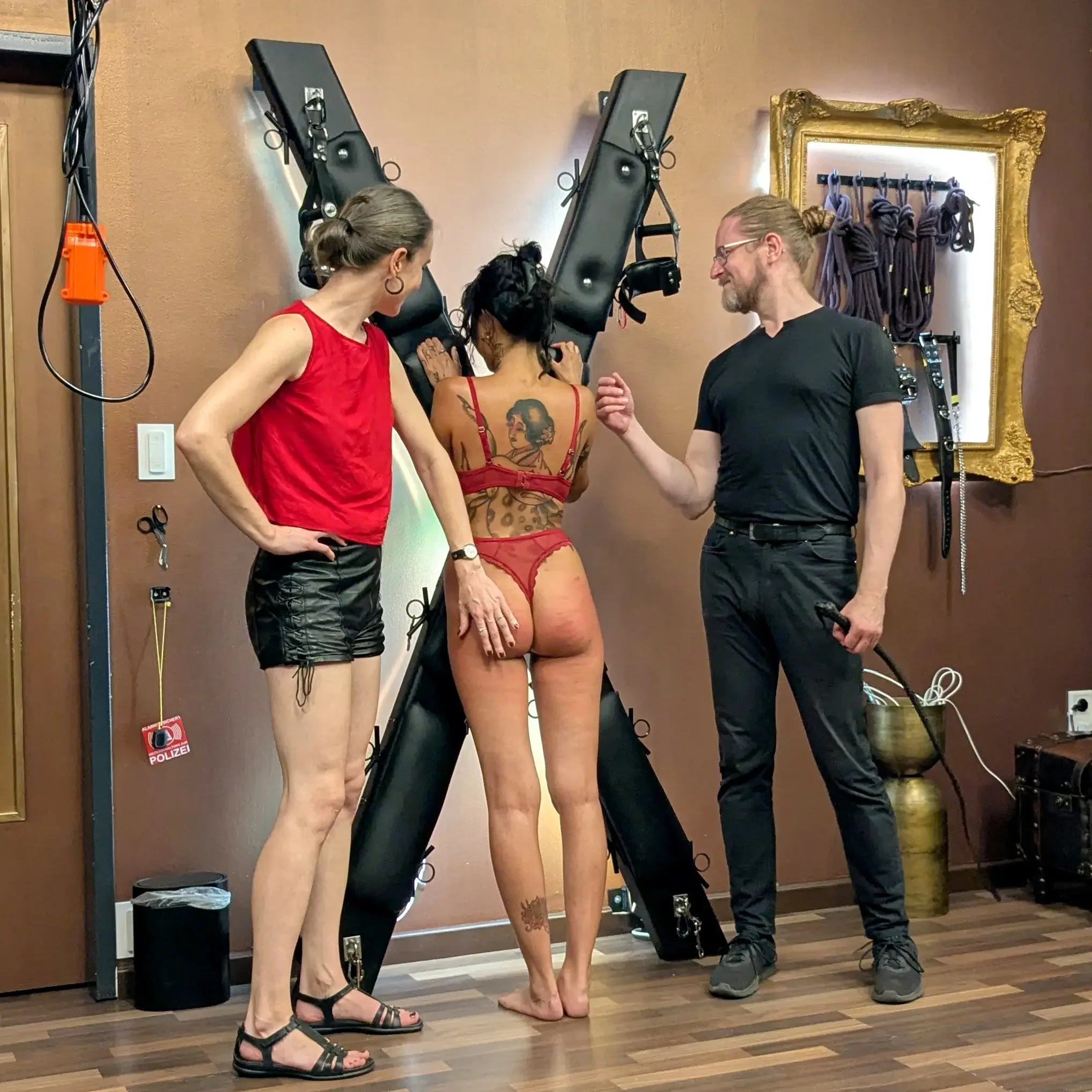
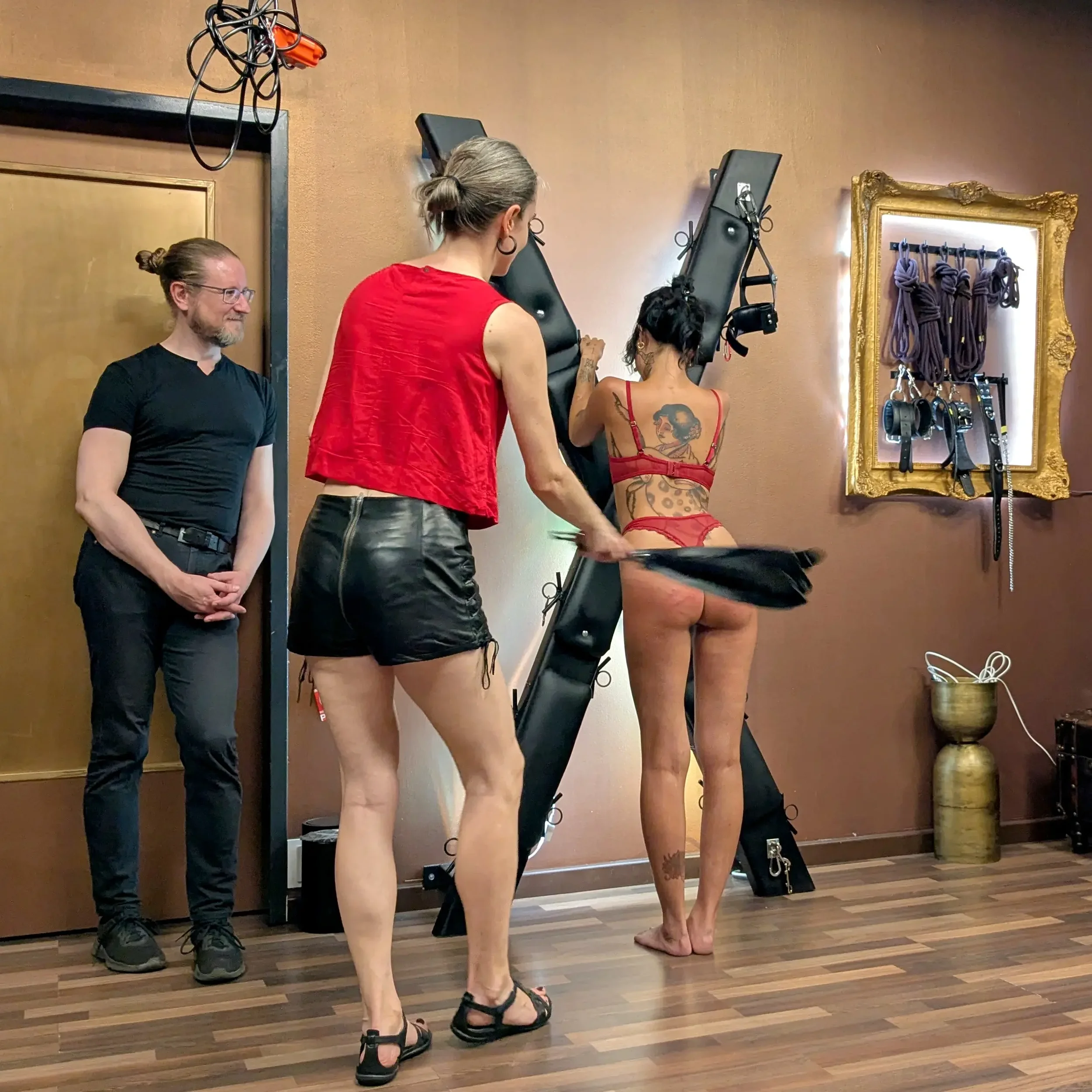
Heavy leather floggers deliver deep, rolling impacts that sink into the muscles and bones rather than the skin. Hekate demonstrated how good technique can create surprisingly high intensity while using far less effort than most people imagine.
Canes and single tails tell a different story. They are sharper, brighter and more precise, each demanding its own technique and respect. Master Samael demonstrated how to work with them both with and without the intention of breaking the skin.
What became obvious throughout the evening was that no impact tool is universally "better". Every person has their own pain profile—the particular type and depth of sensation that takes them where they want to go.
Our volunteer and colleague, Mistress Koto, turned out to be a thud lover. Ten minutes into the session she began to enjoy it, and thirty minutes under the floggers her transformation was impossible to miss. The tension melted from her body, a broad smile spread across her face, and she drifted into that quiet, floating state where every strike seemed to carry her deeper. She was fully present, relaxed and happy.
Pacing Creates the Experience
Hekate shared the story of a guest who had experienced an extremely intense spanking at another studio. "It was nice," he told her, "but I felt overwhelmed." This time he asked for a slightly more gentle, longer-lasting scene —and discovered that slower didn't mean less intense. It simply gave his body time to get where it wanted to go—and he left with a smile that spoke for itself.
Master Samael offered the other side of the coin. For guests seeking dominance and raw pain rather than a pain high, speed can be part of the toolset. A handful of well-placed, cold cane strokes can quickly break through initial control and resistance, allowing the guest to sink into deep, embodied submission early in the session.
Different destinations call for different roads—the real skill lies in knowing which journey the guest came for.
Finding the Edge, not the Extreme
A common misconception is that masochism is taking a lot of pain. But this is very misleading - pain threshold preference is genetically determined for the large part. Masochism is about the love for pain - and finding the right amount of pain is the key.
Reading what a guest actually needs is what separates professional impact play from “just a little flogging”. It's also what separates a good session from one guests won't forget and will keep returning for more.