
A journey beyond pain
Most people spend their lives avoiding pain — but our nervous systems are built to move through intensity, not just escape it. At the edge of your comfort zone, the same chemistry behind pain also drives pleasure, release and resilience.
"I guide you across that threshold — not through a strict dominant/submissive dynamic, but on eye level, built on trust from the very first message."Impact play isn't therapy — but for many people, it becomes deeply therapeutic.
Pain Is Not the Goal
Most people spend their lives trying to avoid pain. Yet our bodies have evolved over thousands of years to cope with intensity—as long as it remains within our control and capacity. Guided by the central nervous system, we are designed to experience, process, and integrate intense sensations, not simply escape them.
At the edge of our comfort zone, intensity activates the same nervous system and many of the same neurochemicals—endorphins, oxytocin, endocannabinoids, and others—that play an important role in pleasure, relaxation, resilience, emotional processing and stress reduction.
After all we only have one nervous system. One body. One chemistry.
Impact play is simply a tool to access this state. Masochism is not a competition of endurance. It is an exploration of sensation, presence and surrender. Intensity is a body-mind space where sensation can be transformed into presence, aliveness, and a deeper connection with our own body.
A Guide Between Worlds
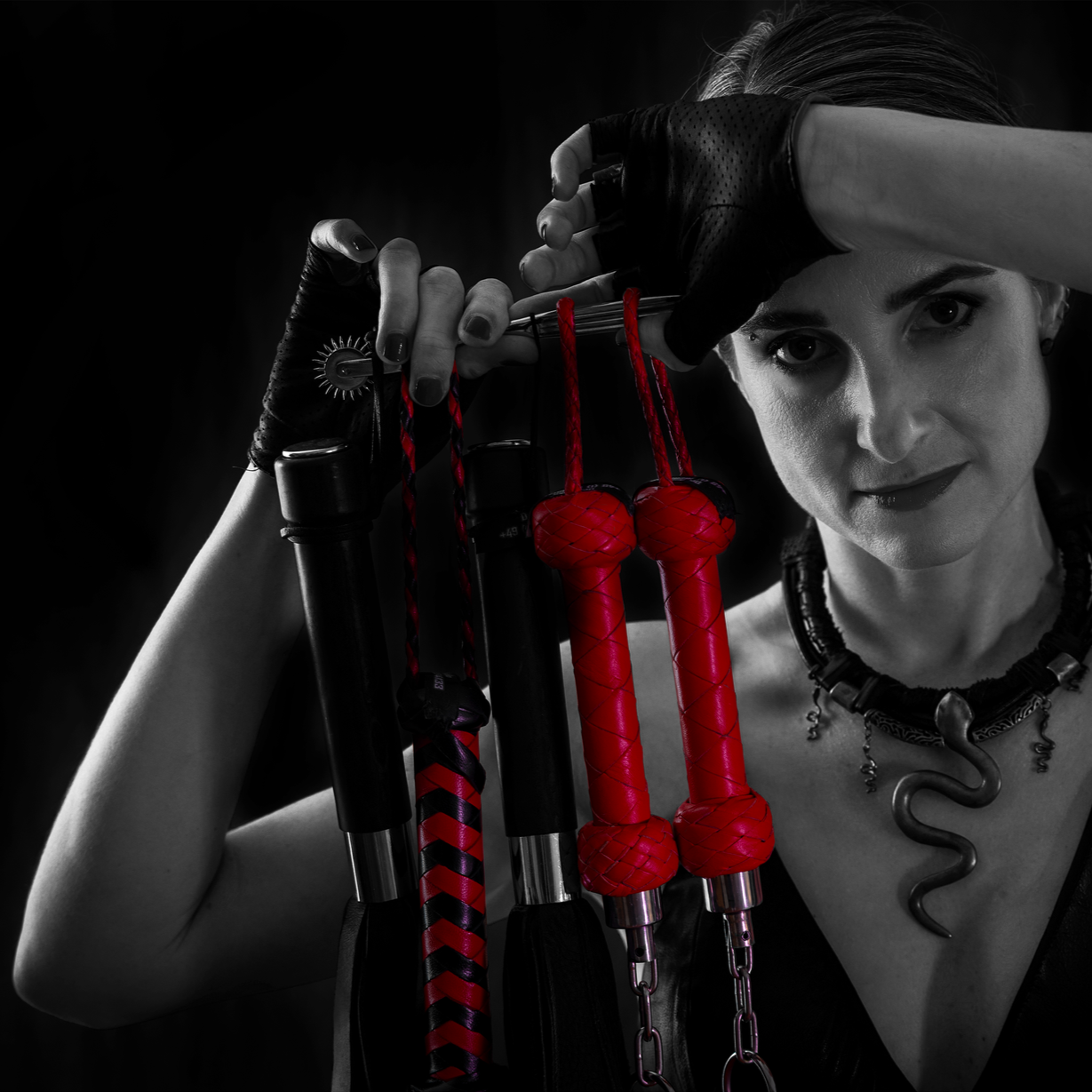
As Hekate, the Greek goddess of thresholds and transitions, I see myself as your guide between ordinary consciousness and a deeper, altered state of consciousness.
With attention, technique, flow, and caring hands, I help my receiver cross the boundary between thinking and feeling, between resistance and surrender, between enduring intensity and enjoying it.
Most of my sessions happen on eyelevel rather than within a strict dominant/submissive dynamic. Being an impact play top is not the same as being dominant. The two roles can overlap, but it’s important to point out that there is a difference. As top, however, I am still the one who leads. I set the rhythm, read your reactions, and guide the experience forward.
I build my sessions on trust from the very beginning, not simply on consent. I ask for explicit consent to strike the body and for the possibility that temporary marks may remain. But consent alone is not enough. My work is about cultivating embodied trust, so that the nervous system can gradually open to the experience.
A person can verbally consent while their body remains tense, vigilant, and prepared for danger. In that state, intensity is far more likely to be endured than embraced. My work to seduce trust therefore begins long before the first touch—and extends far beyond our negotiation—creating the context in which body and mind can recognize the experience as something that is consciously chosen rather than merely tolerated.
Psychology Behind It All
As a psychologist, my focus is fully on your journey.
I pay attention to how you respond to intensity, how you let go, and what helps you feel safe enough to explore beyond your comfort zone. My role is not to inflate my ego or demand your attention or dedication. Instead, I move beyond my own ego and focus on you and the experience unfolding in front of us.
When you open your body and mind to the experience, emotions sometimes surface naturally, because pain has many faces. When something meaningful emerges, I am prepared to hold you there with calmness, care and respect. Impact play is not therapy, but it can be deeply therapeutic.
You do not have to perform for me. You do not have to mask. You simply have to trust your body and let the rest unfold naturally.